Architectura Temporis Research Centre · Herceg Novi, Montenegro · Est. 2024

MEASURING
THE VALUE
OF TIME

We develop reproducible quantitative tools for assessing the temporal quality of historic environments — and integrating these tools into international heritage management practice.

CI = (PI/25 × 0.40) + (AD × 0.35) + (II/100 × 0.25)
Pilot result
CI = 0.828
Object
Casa Zamprogno · 1971 · T+54
Conference
EAAE Cagliari 2026 · Abstract #42
UNESCO partnership
In progress · Kotor buffer zone
01The Problem
The global gap
Step 4 of the UNESCO Historic Urban Landscape methodology (2011) — integrating heritage values into real planning — is officially the least implemented step globally. No standardised quantitative protocol exists for executing it in any jurisdiction.
The Montenegro crisis
New regulations require every project in UNESCO-protected zones to receive a formal heritage assessment. Certified specialists are critically scarce. Hundreds of projects are frozen. Investors lose money on loan interest. Political pressure to exit UNESCO protection status is growing.
The language gap
Investors, designers, and regulators operate without a shared operational language. Conflict reproduces itself wherever there is no measurable criterion — and expert opinion alone cannot be verified, compared, or defended in a regulatory context.
The demographic wave
Post-war architecture of the 1950s–70s is passing to third-generation owners without documented knowledge of its value. Tobia Scarpa, 91, is one of the last living masters of that era. Every year without a Chrono-Passport is a year of irreversible knowledge loss.
99%
of a building's real life
remains undesigned
Step 4
HUL — least implemented
step in global practice
25
standardised intervention types
in AT Impact Matrix v1.0
02Methodology — Chronity Index
0.828

Casa Zamprogno · Tobia Scarpa · 1971 · 54 years later · The building did not age. It ripened.

Chronity Index — CI v5.0
CI = (PI/25 × 0.40) + (AD × 0.35) + (II/100 × 0.25)
PI_raw = A1×1.0 + PMI×2.0 + VQI×1.5 + B2×1.5 + C1×0.75 + C2×0.75
ΔCI = CI_zone(after) − CI_zone(before)
PI
Perceptual Index
Sensory quality: acoustics, patina maturity (PMI), visual quality, light scenario, tactility, olfactory profile. Six parameters with differentiated weights. Protocol: Appendix J.
× 0.40
AD
Authenticity Density
Proportion of authentic Type A and B materials in the visual field. Quantified from project documentation, historical photographs, and CV-based surface analysis.
× 0.35
II
Integrity Index
Degree of preservation of the historic planning structure. Calculated via GIS overlay of current cadastral data against historical stratigraphic layers.
× 0.25
Material classification — AT Entropy Scale
A
Patinating natural
Stone, timber, Corten steel, bare concrete with marble aggregate. Value grows with time.
B
Ageing industrial
Patinated metals, fired brick, terracotta. Age with dignity over decades.
C
Standard modern
Painted renders, standard glazing, galvanised steel. Neutral temporal trajectory.
D
Synthetic substitute
PVC, composite panels, synthetic renders. Peak value at T₀; degrades aesthetically with time.
03ACAP — AI Chronity Assessment Platform

ACAP automates the calculation of CI by combining three AI components into a single end-to-end pipeline — from field photographs to a structured PDF assessment report.

📸
Input
Field photos + measurements
👁
Computer Vision
SAM 2 + CLIP
🗺
GIS Analysis
PostGIS + GeoPandas
📄
LLM Report
PDF + ΔCI verdict
Layer 01
Computer Vision
«The Visual Eye»
SAM 2 (Meta) + CLIP (OpenAI) — fine-tuned on AT dataset
Segments facade surfaces. Classifies materials by AT entropy type (A/B/C/D). Detects visual pollution — AC units, PVC windows, signage. Compares current state against archival photographs to compute Authenticity Density (AD).
Layer 02
GIS Integration
«The Time Map»
QGIS + PostGIS + Python (GeoPandas)
Overlays current cadastral data against digitised historical stratigraphic layers. Computes Integrity Index (II) automatically. Checks UNESCO and national heritage registries for Cultural Significance Multiplier (CSM).
Layer 03
Language Model
«The Expert Voice»
LLM — Claude / GPT-4 / Mistral — structured prompt design
Synthesises CV and GIS outputs with researcher's field measurements. Generates structured justification for each CI parameter. Calculates ΔCI for proposed interventions and issues TIA verdict. Human verification mandatory before report issuance.
Temporis Impact Assessment (TIA) — direct realisation of HUL Step 4
ΔCI = CI_zone(after) − CI_zone(before)
If ΔCI ≥ 0 — intervention is admissible.
If −0.05 ≤ ΔCI < 0 — minor reduction; material correction required.
If ΔCI < −0.05 — significant reduction; concept requires revision.
25 standardised intervention types · AT Impact Matrix v1.0 · ATRC 2026
04Field Research
0.828
Chronity Index · Casa Zamprogno · T+54
«The building did not age. It ripened.»

Tobia Scarpa designed for the life cycle, not for opening day. The choice of concrete with marble aggregate, calibrated cantilever overhangs, and Corten steel — all decisions at T₀ that produced deep temporal quality 54 years later.
Object
Villa Casa Zamprogno, Montebelluna, Italy
Architects
Afra and Tobia Scarpa, 1971
Field study
ATRC 2025 · Protocol Appendix J
PI / 25
19.33 (PMI=5, VQI=4, B2=4, A1=4)
AD
0.84 — Type A surfaces dominant
II
90 / 100 — planning integrity intact
Reliability
PI_verified (A1 instrumentally measured)
Pilot study — Herceg Novi · Kotor World Heritage buffer zone
Montenegro represents the optimal scale for the first ACAP pilot. Kotor has been a UNESCO World Heritage Site since 1979. Its buffer zone faces increasing investment and tourism pressure. Three of seven planned CI_zone measurement points have been completed (field work 2025). A partnership with the UNESCO World Heritage Centre for full TIA verification in the Kotor buffer zone is currently under discussion.
05Roadmap — 36 months
01
Validation & Dataset
Months 1–12 · TRL 2 → 3
  • Complete CI_zone measurements in Herceg Novi (7 points)
  • Inter-expert reliability test (ICC ≥ 0.75)
  • Digitise Ilyanic stratigraphic layers in QGIS
  • Build structured photo dataset (500+ images, 10–15 objects)
  • Register ATRC NGO; file grant applications
  • Patent consultation · Architectura Temporis™ trademark
02
AI Prototype
Months 12–24 · TRL 3 → 5
  • LLM prototype: manual input → PDF report (Month 12–13)
  • Annotate 500 photos; fine-tune SAM 2 + CLIP on AT dataset
  • Integrate CV + GIS pipeline
  • First end-to-end test: photo → CI report (Month 17–20)
  • Field validation on Herceg Novi and Kotor objects
  • Academic publication of verification results
03
Scale
Months 24–36 · TRL 5 → 7
  • Domain adaptation: Croatia, Greece, Italy, Portugal
  • API for permit-issuing system integration
  • SaaS subscription model for architects and bureaux
  • Pilot contracts with 2–3 municipalities
  • AT researcher certification programme
  • UNESCO HUL Step 4 institutional recognition
Total programme budget (preliminary)
€ 280 000 – 790 000
Horizon Europe · SNF · UNESCO/ICOMOS · National funds
Figures subject to revision after partner negotiations
Academic validation
EAAE Cagliari · August 2026
Session UN-Build · Abstract #42 accepted without revisions
Paper: «Time as the Right Measure»
06About ATRC
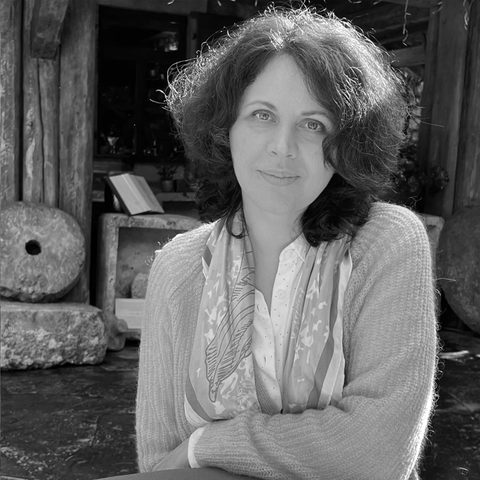
Sergei
Tatarnikov
Founder · Principal Researcher · ATRC

Architect and independent researcher based in Herceg Novi, Montenegro. Founded Architectura Temporis Research Centre in autumn 2024 to develop the first reproducible quantitative methodology for measuring temporal quality in historic environments.

The AT methodology extends the classical Vitruvian triad (Firmitas, Utilitas, Venustas) with a fourth pillar: Tempus. Time is not a threat to architecture. It is a building material that requires its own design language, tools, and documentation.

FoundedAutumn 2024
MethodologyAT v5.0 · CI v5.0 · TIA v2.0
Intervention types25 (Impact Matrix v1.0)
Pilot objectsHerceg Novi · Kotor · Casa Zamprogno
Publicationsarq · TAD · Built Heritage
UNESCO packageSubmitted via Ambassador Ponorac
Legal statusNGO registration in progress
07Contact & Partnership

Direct contact

Location
Herceg Novi, Montenegro
Conference
EAAE Cagliari · 26–29 Aug 2026

Partnership opportunities

Academic
Research collaboration · Horizon Europe consortium
Technical
ML engineering · GIS analysis · ACAP development
Institutional
Heritage authorities · Municipalities · UNESCO/ICOMOS
Pilot sites
Historical zones seeking CI_zone verification
ATRC is not requesting funding at this stage — we are seeking institutional partnership for pilot verification of TIA methodology at a specific World Heritage property. The full operational package (TIA Protocol, AT Impact Matrix v1.0, Appendix J field protocol) is available to verified partners under NDA. Detailed methodology documentation available upon request.